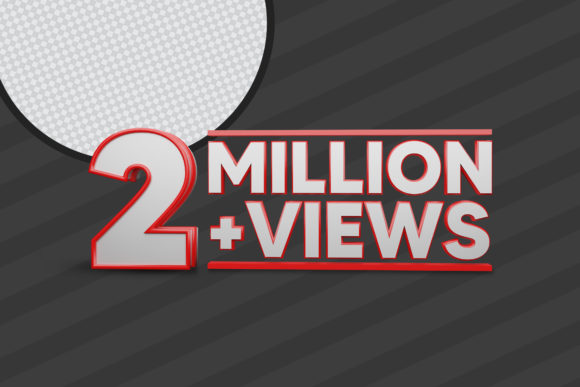
2 Million Views 3D Render Premium PSD: Integrating High-Resolution Assets into Professional Workflows
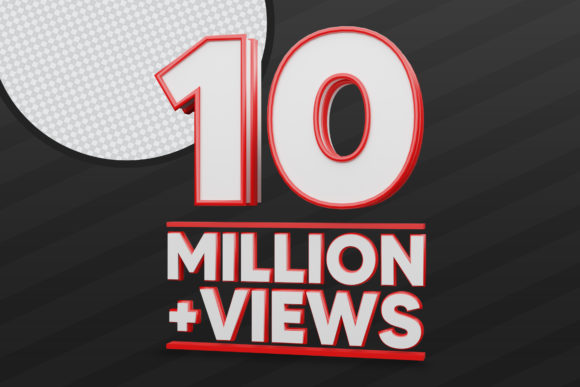
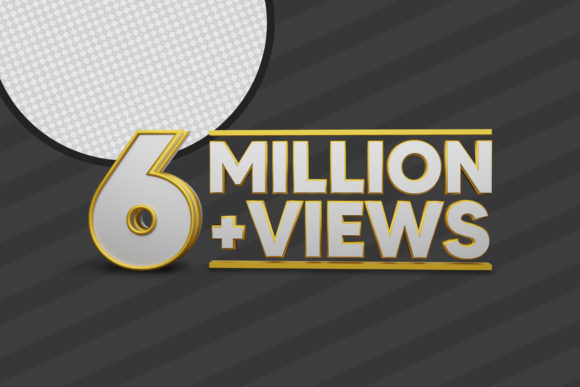
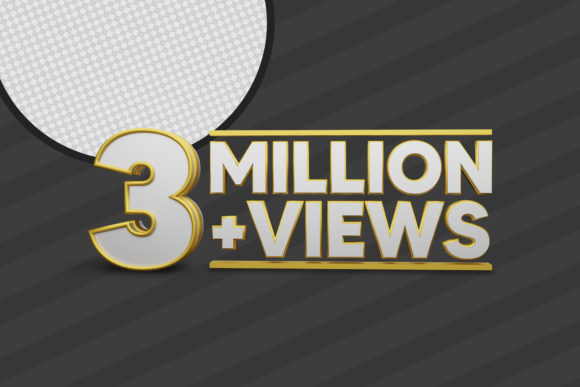
In the modern digital landscape, visual content is not merely decorative; it is a fundamental component of communication, branding, and conversion. Whether you are a marketer launching a campaign, a freelancer pitching to a client, or a small business owner updating your online presence, the quality of your imagery dictates the perceived value of your work. This is where 2 Million Views 3D Render Premium PSD becomes a critical asset in your creative toolkit. It represents more than just a static image; it is a high-fidelity source file designed for flexibility, scalability, and professional integration.
The term "2 Million Views" suggests a level of popularity and proven utility that extends beyond simple aesthetics. It implies a design that has been tested in real-world scenarios, resonating with audiences across various platforms. However, the true power of this asset lies in its format. As a Premium PSD (Photoshop Document), it offers a layered architecture that allows creators to manipulate depth, lighting, composition, and text without compromising the original integrity of the 3D render. This accessibility transforms the asset from a passive image into an active tool for execution.
Understanding the Asset Within the Creative Process
To utilize 2 Million Views 3D Render Premium PSD effectively, one must first understand its position within the broader design workflow. Unlike a flattened JPEG or PNG exported directly from a rendering engine, a premium PSD retains the editable layers that define the complexity of the scene. This distinction is vital for professionals who require precision. When you receive this file, you are not just receiving a picture; you are receiving a modular construction kit.
The inclusion of high-resolution data ensures that the asset remains crisp regardless of the output medium. Whether you are printing a large-format banner for a trade show or displaying a thumbnail on a mobile device, the resolution supports both requirements. The ability to extract the design as a PNG from the attached PSD file further expands its utility. This specific feature allows users to isolate the 3D elements from any background, making them instantly adaptable for overlaying onto different color schemes, textures, or brand environments.
Strategic Integration Before Project Initiation
Integration begins before the actual design work starts. During the planning phase of a project, having access to a versatile 3D asset can streamline the concept development process. Instead of spending hours modeling a generic object or searching for stock photography that lacks uniqueness, a designer can import the 2 Million Views 3D Render Premium PSD into their workspace. From there, they can experiment with variations immediately.
This approach significantly reduces the time-to-market for creative campaigns. By treating the PSD as a starting point rather than a final product, teams can focus their energy on strategy, messaging, and layout rather than basic asset creation. For educators and bloggers, this means faster turnaround times for course materials or articles that require engaging visuals. For entrepreneurs, it translates to the ability to prototype marketing materials quickly and cost-effectively.
Workflow Optimization and Practical Implementation
The transition from concept to execution requires a seamless flow between tools and resources. The 2 Million Views 3D Render Premium PSD is designed to interact smoothly with standard industry software, primarily Adobe Photoshop, but also compatible with other layer-based editors. Its compatibility ensures that no matter what ecosystem a professional operates in, the asset remains accessible and functional.
When working with this file, efficiency is key. Organizing the layers logically is a best practice that enhances usability. If the file comes pre-organized, it saves valuable time. If not, taking a moment to group related elements—such as shadows, highlights, and the primary 3D object—can prevent errors during complex edits. This organizational discipline pays dividends when revisiting a project months later or handing off files to a colleague.
- Preparation: Ensure your software version supports the specific features used in the PSD. Check for smart objects or adjustment layers that might require updated plugins.
- Extraction: Use the layer visibility controls to isolate the 3D design. Save these isolated elements as transparent PNGs for use in web graphics or social media posts.
- Adaptation: Modify colors using adjustment layers to match your brand guidelines without altering the underlying 3D geometry.
This methodical approach to handling the file ensures consistency across all outputs. Inconsistency in visual assets can dilute brand identity, so maintaining the structural integrity of the 3D render while adapting its appearance is a crucial skill. The premium nature of the PSD allows for non-destructive editing, meaning you can revert changes at any stage without degrading the image quality.
Application Across Diverse Media Channels
One of the most significant advantages of this asset is its versatility across different media types. The prompt mentions the ability to use the design on any type of banner. This capability is essential for marketers who need to maintain a cohesive look across physical and digital touchpoints. A banner for a website header, a billboard for outdoor advertising, or a flyer for a local event can all share the same core visual element derived from the same source file.
For freelancers and publishers, this versatility translates to multiple revenue streams from a single purchase. A single 2 Million Views 3D Render Premium PSD can serve as the hero image for a landing page, the background for an email newsletter, and the central graphic for a printed brochure. By mastering the extraction and resizing techniques available within the PSD, creators can maximize the return on investment for their assets.
The process of converting the design to PNG is particularly useful for web optimization. While the PSD is heavy and best suited for editing, the PNG format is lightweight and universally supported by browsers. This conversion step is often the bridge between the creative studio and the public-facing web. Ensuring that the transparency is preserved during this export is a technical detail that separates amateur results from professional ones.
Quality Control and Long-Term Viability
Sustainability in design workflows involves considering the long-term use of assets. A premium PSD file is an investment in longevity. Because the layers remain editable, the asset does not become obsolete when trends shift. You can update the text, change the color palette, or swap out specific 3D components years after the initial download, keeping the design relevant without needing to recreate the entire scene.
Quality control is another factor that distinguishes a premium asset from a free alternative. The "Premium" designation typically implies higher standards in texture mapping, lighting calculation, and overall resolution. When integrating 2 Million Views 3D Render Premium PSD into a project, the expectation is that the final output will meet rigorous professional standards. This reliability builds trust with clients and audiences who have little patience for pixelated or poorly rendered graphics.
Furthermore, the high-resolution nature of the file future-proofs your content. As screen densities increase with new display technologies, images that were once considered high-quality may appear soft on modern devices. Starting with a high-resolution source ensures that your designs remain sharp on Retina displays, 4K monitors, and even larger print formats. This foresight eliminates the need for constant re-rendering or sourcing new images as technology evolves.
Bridging the Gap Between Concept and Reality
The ultimate goal of any creative workflow is to translate an abstract idea into a tangible reality. The 2 Million Views 3D Render Premium PSD acts as a powerful catalyst in this process. It removes the technical barriers that often slow down creativity, allowing professionals to focus on the narrative and the message. By providing a robust, editable foundation, it empowers users to take ownership of their visual storytelling.
Whether you are a hobbyist looking to enhance a personal blog or a corporation managing a global marketing strategy, the principles of preparation, organization, and adaptation remain the same. The asset serves as a common language between designers, developers, and stakeholders, facilitating clearer communication about the visual direction of a project.
In conclusion, integrating 2 Million Views 3D Render Premium PSD into your workflow is not just about acquiring a cool image; it is about adopting a more efficient, flexible, and professional approach to design. By understanding how to manipulate the layers, extract the necessary formats like PNG, and apply the design across various banners and media, you unlock the full potential of the asset. This strategic utilization leads to higher quality outcomes, faster project completion, and a stronger visual identity in a crowded digital marketplace.
As you move forward with your next project, consider how this tool fits into your specific needs. Evaluate your current bottlenecks, identify where high-quality 3D assets could accelerate your progress, and implement the practices discussed here to elevate your work. The result is a workflow that is not only productive but also capable of producing visually stunning and commercially viable content consistently.