3D Mandala SVG Design File: A Practical Review for Digital Creators
In the rapidly evolving landscape of digital design and content creation, finding assets that balance aesthetic complexity with technical flexibility is a persistent challenge. The 3D Mandala SVG Design File emerges as a significant resource for professionals and hobbyists alike who require high-quality vector graphics without the limitations of raster-based images. This review evaluates the file's utility, focusing on its delivery format, versatility across different software platforms, and its potential application in commercial and personal projects.
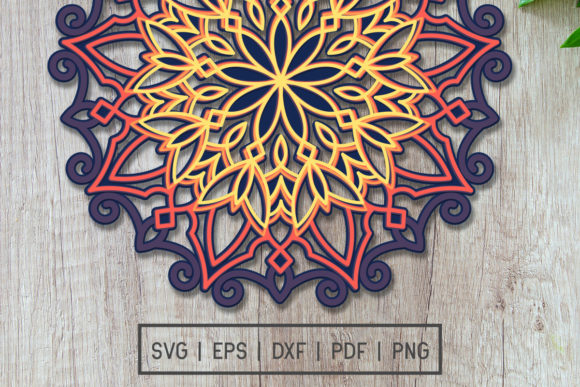
At its core, this asset is not merely an image but a comprehensive package designed to integrate seamlessly into modern workflows. Unlike static JPEGs or PNGs that lose quality upon scaling, this collection provides editable vector data. The primary offering is a ZIP folder containing multiple file formats—specifically SVG, DXF, EPS, PNG, and PDF. This multi-format approach addresses a critical pain point in the industry: compatibility. Whether you are working in Adobe Illustrator, CorelDRAW, Cricut Design Space, or a web development environment, having access to the appropriate source file ensures that the final output remains crisp and precise.
Technical Specifications and Usability
The dimensions of the artwork are standardized at approximately 12 x 12 inches. For designers, this square aspect ratio offers immense flexibility. It serves as an ideal canvas for social media graphics, website headers, or print-on-demand products like t-shirts and mugs. However, the true value lies in the nature of the file itself. As a digital file download, there is no shipping time or physical inventory involved. You receive immediate access to the ZIP folder upon purchase, allowing for instant deployment into your project timeline.
A crucial step often overlooked by new users is the extraction process. The instructions specify that the ZIP file needs to be extracted before use. While this is standard procedure for compressed archives, it is worth noting that accessing the individual components within the archive is essential for workflow efficiency. Once extracted, the files are ready to be opened in their respective applications. The inclusion of the DXF format is particularly noteworthy for those utilizing Computer-Aided Manufacturing (CAM) systems. DXF files are the industry standard for laser cutters and vinyl plotters, meaning this design can move directly from screen to production without complex conversion steps that might introduce errors.
Understanding the 3D Effect in Vector Format
The term "3D" in the title refers to the visual depth created through shading, layering, and perspective techniques applied to the mandala pattern. In a vector environment, these effects are achieved using gradients, mesh tools, or layered shapes rather than pixel manipulation. This distinction is vital for the longevity of the design. When you scale a raster image up, pixels become visible, resulting in a jagged, low-resolution appearance. With the SVG version of this 3D Mandala, you can resize the graphic to cover a billboard or shrink it to a business card icon, and the mathematical curves will render perfectly every time.
The EPS format included in the bundle further enhances professional usability. Encapsulated PostScript is widely supported by legacy design systems and print shops that may not yet have adopted the latest SVG standards. This ensures that the design remains compatible with older equipment or specific printing workflows where vector paths must be preserved exactly as intended. Similarly, the PNG and PDF options provide convenient previews and documents for quick sharing or direct embedding in presentations without needing specialized vector software open.
Strategic Applications for Professionals and Entrepreneurs
The target audience for this resource spans a diverse range of roles, from freelance marketers to small business owners. For entrepreneurs launching a brand, consistency in visual identity is paramount. The intricate details of a mandala pattern can serve as a powerful background element, adding texture and sophistication to branding materials without overwhelming the primary message. Because the file is vector-based, it can be easily recolored to match any brand palette. If a client requires a blue version instead of the default, the user can simply select the fill tool in their vector editor and apply the new color instantly, maintaining the illusion of depth and shadow.
For educators and bloggers, visual engagement is a key metric for retention. A high-quality 3D mandala can break up long blocks of text in educational materials, creating a visually appealing anchor that draws the reader's eye. The complexity of the design suggests a level of craftsmanship that adds perceived value to the content being presented. Furthermore, creators who sell digital downloads or physical merchandise benefit significantly from the DXF and SVG formats. They can upload these files directly to print-on-demand services or use them to create cutting files for home crafting machines, expanding their product lines with minimal additional cost.
Integration into Creative Workflows
When evaluating the practical value of the 3D Mandala SVG Design File, one must consider the time saved in asset preparation. Manually recreating such a detailed geometric pattern would take hours or even days of work. By acquiring this pre-made asset, creators can redirect their energy toward strategy, copywriting, and broader campaign management. The reliability of the file structure means less troubleshooting and more execution.
However, it is important to maintain realistic expectations regarding the editing process. While the file is highly flexible, the 3D effect relies on specific layer structures. Users attempting to modify the design should be comfortable navigating layers and understanding how vector shading works. Simple adjustments like changing colors or resizing are straightforward, but altering the fundamental geometry of the mandala may require advanced knowledge of the software being used. This is not a limitation of the file itself but rather a characteristic of working with complex vector illustrations.
Quality Assessment and Long-Term Value
In the realm of digital assets, consistency is a measure of quality. Does the file hold up under scrutiny? Does it perform well across different mediums? Based on the specifications provided, the 3D Mandala SVG Design File demonstrates strong adherence to professional standards. The inclusion of multiple formats acts as a safeguard against obsolescence. As software evolves, older formats like EPS ensure backward compatibility, while modern formats like SVG ensure forward compatibility with responsive web design and mobile applications.
The pricing model associated with such a download typically involves a single payment for unlimited usage within the scope of the license. This represents a high return on investment compared to hiring a designer for custom work. For a freelancer managing tight margins, the ability to acquire premium-quality assets for a fraction of the cost of a custom commission is a strategic advantage. It allows for rapid prototyping and iteration, enabling the creator to test different designs quickly without financial risk.
Considerations for Specific Use Cases
While the asset is versatile, it is most effective when used in contexts that appreciate detail and symmetry. It may be less suitable for minimalist designs that rely on stark simplicity and negative space. In those cases, the density of the mandala pattern could compete with other elements. Additionally, users should verify the specific licensing terms associated with the download. Most digital design files come with restrictions on resale; typically, you cannot resell the raw file as-is, but you can incorporate it into a larger, unique product. Understanding these boundaries is essential for maintaining ethical business practices and avoiding legal complications.
The size of the artwork, at 12 x 12 inches, is a standard medium resolution for many applications. For large-scale printing, such as banners or wall murals, users should ensure that the DPI settings in their print software are adjusted appropriately to utilize the full potential of the vector data. While vectors are resolution-independent, the final output depends heavily on the printer's capabilities and the RIP (Raster Image Processor) software used. In web contexts, the SVG format is lightweight and scales effortlessly, making it an excellent choice for high-DPI screens found on modern smartphones and tablets.
Final Evaluation
The 3D Mandala SVG Design File stands out as a robust tool for anyone needing sophisticated geometric art in a scalable format. Its strength lies in its multi-format delivery, which bridges the gap between digital design and physical production. By providing SVG, DXF, EPS, PNG, and PDF options, the package caters to a wide spectrum of technical requirements, ensuring that the user is never left without the right tool for the job.
For professionals seeking to enhance their portfolio, entrepreneurs looking to streamline their product development, and hobbyists eager to experiment with creative projects, this file offers a reliable foundation. The immediate availability via digital download removes logistical barriers, while the 12 x 12 inch dimension provides a versatile starting point for various layouts. While it requires a basic understanding of vector software to fully exploit its features, the time and effort saved in asset creation make it a valuable addition to any creative toolkit. Ultimately, its value is determined by how effectively it integrates into your existing workflow, and for those prioritizing quality and flexibility, it delivers a compelling solution.